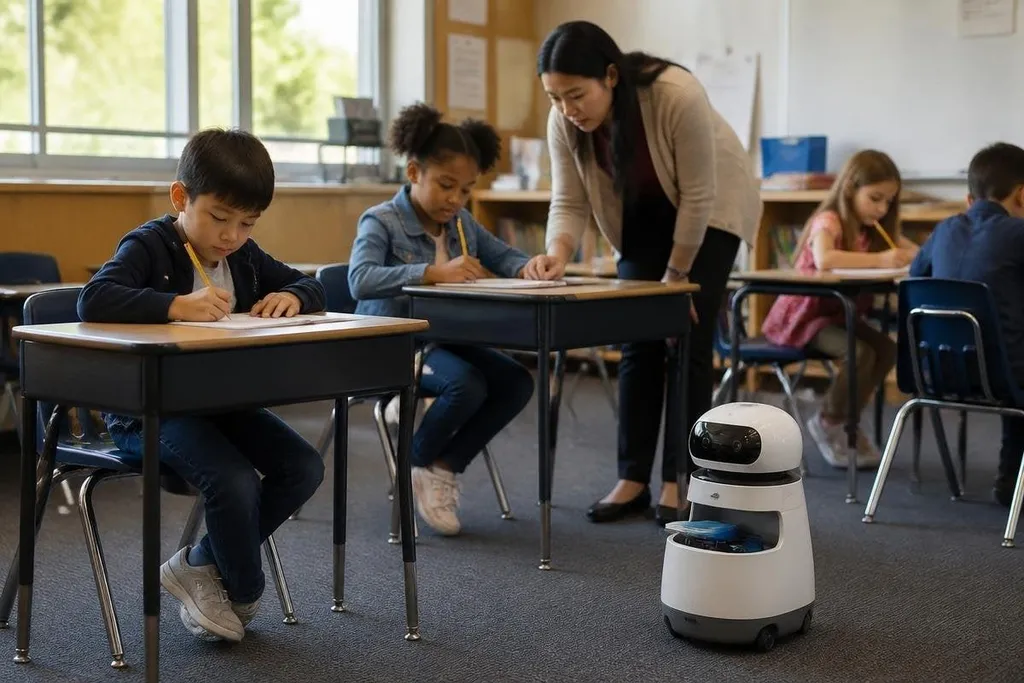
A school robot will need to do more than move, speak, or answer questions. Its future will depend on whether it helps a teacher run a lesson, gives a student useful practice, and works safely in a crowded room.
- Teachers will set the target: The robot should support a lesson that already has a clear purpose.
- Students will need control: A machine that only gives answers leaves less room for thought.
- Schools will check the full cost: Hardware, repairs, training, and software all count.
The classroom job comes first
Educational robots make sense when they handle a task that benefits from repeated practice or physical feedback.
With a robot arm, students can test movement and force. Mobile robots can give lessons in mapping, sensors, and path planning. For spoken practice, a social robot can help, but its value depends on the lesson around it.
That work needs a clear result. A teacher should be able to say what students will do, what the robot will do, and how the class will check the work. Without that link, the robot becomes another screen in the room, with more parts to charge and repair.
The best future use may be narrow. A robot that repeats one science experiment safely could help more than a general machine that claims to teach every subject. Schools already have limited time, so a robot must fit the timetable rather than ask teachers to build an entire course around it.
Teachers stay in charge
A classroom robot should give teachers useful control over its actions. They may need to pause a task, change the level of help, review student work, or stop the machine when the room changes.
That control also affects data. Cameras, microphones, and student accounts can collect information that schools must handle with care. A robot should collect only what the lesson needs, keep access limited, and make deletion clear to staff.
The physical design matters too. Wheels, arms, speakers, and batteries all create practical limits. A robot that works in a quiet lab may struggle when chairs move, several students speak at once, or a charging lead crosses the floor.
For named machines, test dates, and company details, read Robot24.com’s classroom robot reporting before weighing the cost of putting one in a school. The next question is what schools will pay.
What schools will pay for
The purchase price tells only part of the story. A school also needs to plan for setup, teacher training, replacement parts, software access, storage, and someone who can fix faults. Those costs can decide whether a pilot continues after the first term.
The robot must also fit existing systems. If staff need a separate account for every class, manual updates for every lesson, or special hardware in each room, the work may outweigh the teaching benefit. A plain control panel and clear fault messages can matter more than a longer list of features.
Student access needs thought as well. One robot shared by a whole class creates a different lesson from a set of small robots used in pairs. The choice affects waiting time, group work, and how much hands-on practice each student gets.
What remains unproven
Robots can repeat actions with steady timing, but that does not mean they understand a student's mistake. A system may respond to a spoken request while missing confusion, stress, or a problem with the lesson itself.
Long-term classroom results also need careful checks. A short demonstration can show that a robot moves an object or speaks a sentence. It cannot, on its own, show that students learn more, that teachers save time, or that the machine keeps working after months of daily use.
I'd wait for evidence from ordinary classrooms before buying a robot for a broad teaching role. A small trial with a clear task gives schools a better basis for a larger order.
A buying check for school leaders
Use this list before approving a classroom robot:
- Name the lesson: Write the student task in one sentence and link every robot action to it.
- Set the safety stop: Check who can stop the robot, how fast it stops, and where the control sits.
- Count the full cost: Add training, repairs, software, storage, and replacement parts to the quote.
- Check student access: Work out how many minutes each student gets with the robot during a normal class.
- Test the data path: Confirm what the cameras and microphones record, who can view it, and when it is deleted.
- Choose a result: Decide which student work or teacher time measure will show whether the trial should continue.
The next stage for educational robots will be decided in ordinary rooms, not polished demonstrations. Schools that can name the task, measure the result, and plan for repair will know whether a robot belongs in the lesson.